Is BBC Earth Science Safe for Kids? Safety Score: B
@bbcearthscience · 1.8M subscribers · Graded July 12, 2026 · Based on 100 recent videos
@bbcearthscience · 1.8M subscribers · Graded July 12, 2026 · Based on 100 recent videos
This is a good channel for older children and teenagers interested in science and nature, but I would not recommend it for children under 8 without parental co-viewing.
Best for ages 10-16 years. Not recommended under age 8. Acceptable for 8-18 years.
The content's complexity and occasional intense themes make it unsuitable for younger children.
| Dimension | Score | Headline |
|---|---|---|
| Content Appropriateness | 22/25 | Content is generally appropriate, with some intense themes for younger viewers. |
| Shorts & Dopamine Factor | 23/25 | Low Shorts percentage indicates a focus on substantive long-form content. |
| Age Clarity | 18/25 | Content is best suited for older children and teenagers, not toddlers. |
| Educational Value | 24/25 | High educational value, covering diverse science and engineering topics. |
Content is generally appropriate, with some intense themes for younger viewers.
While most videos are educational and factual, some topics like 'How This Creature Evolved to Become a ‘Killing Machine’' or 'The Job Nobody Wants: Sewage Diver' might be too intense or unappealing for very young children. There is no evidence of manipulative clickbait or misleading titles.
Low Shorts percentage indicates a focus on substantive long-form content.
With only 6% Shorts among the last 100 uploads, this channel primarily offers longer, more in-depth videos. This pattern suggests an intent to provide educational content rather than encourage addictive scrolling behavior.
Content is best suited for older children and teenagers, not toddlers.
The channel covers complex scientific and engineering topics, such as 'The Extraordinary Stories Behind the Elements' and 'Could Hydrogen Save the Planet?'. The language and concepts are generally too advanced for preschoolers or early elementary school children, making it clearer for an older audience.
High educational value, covering diverse science and engineering topics.
The channel consistently delivers factual information across various scientific disciplines, including chemistry in 'The World’s Rarest Pigment', biology in 'A Mother’s Journey to Save Babies', and engineering in 'The Engineering Idea that United a City'. It aims to inform and explain complex concepts clearly.
This channel provides educational content focused on science, nature, and engineering from the BBC. It features documentaries and explanations of various phenomena and human achievements. The content is designed to inform and engage viewers about the natural world and scientific principles.
Parents should know that this channel offers high-quality, factual programming, but the topics and presentation style are geared towards an older audience, likely pre-teen and above. Some videos might contain imagery or concepts that could be frightening or complex for younger children.
This is a good channel for older children and teenagers interested in science and nature, but I would not recommend it for children under 8 without parental co-viewing.
Watch a few videos with your child first to gauge their interest and understanding, especially for topics like evolution or complex engineering projects.
 The Extraordinary Stories Behind the Elements | BBC Earth Science
— Positive
The Extraordinary Stories Behind the Elements | BBC Earth Science
— Positive
This video offers a deep dive into the periodic table, providing excellent educational content for older children interested in chemistry.
 How This Creature Evolved to Become a ‘Killing Machine’ | Evolution | BBC Earth Science
— Concern
How This Creature Evolved to Become a ‘Killing Machine’ | Evolution | BBC Earth Science
— Concern
The title and content, while educational, might be too intense or scary for sensitive younger viewers due to the focus on predatory evolution.
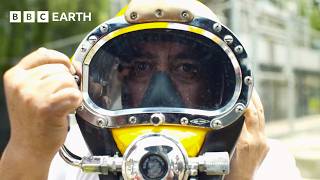 The Job Nobody Wants: Sewage Diver | BBC Earth Science
— Neutral
The Job Nobody Wants: Sewage Diver | BBC Earth Science
— Neutral
This video explores an unusual and challenging profession, which can be interesting but might be unappealing or slightly gross for some children.
 A Mother’s Journey to Save Babies | BBC Earth Science
— Positive
A Mother’s Journey to Save Babies | BBC Earth Science
— Positive
Featuring David Attenborough, this video highlights animal parental care, offering valuable lessons in biology and empathy.
 Trainee Astronaut Won't Let a Medical Setback Hold Him Back | BBC Earth Science
— Positive
Trainee Astronaut Won't Let a Medical Setback Hold Him Back | BBC Earth Science
— Positive
This video showcases resilience and determination in the face of challenges, providing an inspiring message for viewers.
VidCove's Channel Safety Grader analyzes the 100 most recent videos on BBC Earth Science using Google Gemini, scoring four independent dimensions on a 0–25 scale:
BBC Earth Science's Shorts ratio in this sample is 6% — roughly 6 of the 100 videos sampled were Shorts. Reports are regenerated when channel content changes materially or after 180 days have passed.
VidCove lets you approve every channel before your child sees it. No algorithm. No Shorts. No recommendations. Just the channels you trust. Free 7-day trial — no credit card required.