Is UF Game Lab Safe for Kids? Safety Score: C
@ufgamelab · 5K subscribers · Graded October 23, 2026 · Based on 100 recent uploads
@ufgamelab · 5K subscribers · Graded October 23, 2026 · Based on 100 recent uploads
This channel is acceptable for older children and teens interested in biology or wildlife, but younger children will likely find it unengaging due to its academic nature.
Best for ages 13+. Not recommended under age 10. Acceptable for 10+.
The content's academic depth and scientific language are best suited for older children and teenagers.
| Dimension | Score | Headline |
|---|---|---|
| Content Appropriateness | 25/25 | Content is academic and focuses on wildlife science, suitable for all ages. |
| Shorts & Dopamine Factor | 15/25 | Mix of long-form and Shorts, with Shorts making up a third of recent uploads. |
| Age Clarity | 10/25 | Content is academic, targeting adults or older teens, not clearly for children. |
| Educational Value | 20/25 | High educational value, focusing on wildlife biology and ecological research. |
Content is academic and focuses on wildlife science, suitable for all ages.
The channel discusses topics like 'How Much Hardwood Do Turkeys Actually Need?' and 'Are Turkey Poults Really Drowning in the Rain?' in a scientific, factual manner. There is no inappropriate language, violence, or scary imagery. The content is presented as research findings.
Mix of long-form and Shorts, with Shorts making up a third of recent uploads.
32% of the last 100 uploads are Shorts, which is a moderate percentage. While there are many long-form videos, the presence of Shorts like 'Baby Turkeys Drink Raindrops Off LEAVES' and 'Always watching for the bugs 👀' could encourage quick, passive consumption.
Content is academic, targeting adults or older teens, not clearly for children.
The discussions, such as 'Anecdote vs. Research: When Is a Study Just a Story?' and 'What Affects Jake Survival?', use scientific terminology and research methodologies. While the subject matter (turkeys) might appeal to younger children, the presentation is not simplified for them.
High educational value, focusing on wildlife biology and ecological research.
The channel provides detailed information on turkey ecology, habitat management, and scientific research methods, as seen in videos like 'How to transform old fields into brooding cover' and 'Does rain increase nest predation risk?'. It encourages critical thinking about wildlife science.
This channel, UF Game Lab, focuses on scientific research and discussions related to wild turkeys and their habitats. It features interviews with biologists and analyses of studies, providing in-depth information on wildlife management and conservation. The content is primarily aimed at an adult or academic audience.
Parents should understand that while the subject matter (turkeys) is harmless, the presentation is academic and may be too complex or dry for younger children. It's not designed as children's educational content, but rather for those interested in wildlife science research.
This channel is acceptable for older children and teens interested in biology or wildlife, but younger children will likely find it unengaging due to its academic nature.
If your child is interested in wildlife, watch a few videos with them first to gauge their engagement and understanding of the scientific concepts discussed.
 How Much Hardwood Do Turkeys Actually Need? | Ep 197
— Positive
This video exemplifies the channel's in-depth, research-based approach to wildlife science, discussing specific dietary needs of turkeys.
 Anecdote vs. Research: When Is a Study Just a Story? | Ep 202
— Positive
This video offers a valuable lesson in scientific literacy, distinguishing between anecdotal evidence and rigorous research, which is beneficial for critical thinking.
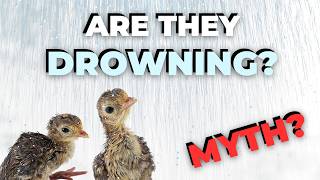 Are Turkey Poults Really Drowning in the Rain? | Ep 168
— Positive
This video debunks a common myth using scientific evidence, demonstrating a practical application of research to understand animal behavior.
 Baby Turkeys Drink Raindrops Off LEAVES
— Neutral
This Short provides a brief, interesting observation about turkey poults, but its brevity and format are typical of content that can encourage passive scrolling.
 Not All Hens Are Good Mothers...
— Neutral
While the title might seem dramatic, the video discusses the biological factors influencing poult success, maintaining the channel's scientific focus.
VidCove uses AI to assess titles and descriptions from up to 20 recent videos, along with upload patterns such as Shorts across up to 100 recent uploads. It can miss context or make mistakes. Use the report to help you decide what is right for your child.
This report uses titles and descriptions from up to 20 recent videos on UF Game Lab and upload patterns from 100 recent uploads.
The grader scores four dimensions on a 0–25 scale, then combines them into a weighted score out of 100: content appropriateness (40%), Shorts patterns (25%), age clarity (25%), and educational value (10%). That overall score determines the letter grade.
UF Game Lab's Shorts ratio in this sample is 32% — roughly 32 of the 100 videos sampled were Shorts. Reports are regenerated when channel content changes materially or after 180 days have passed.
VidCove lets you approve every channel before your child sees it. No algorithm. No Shorts. No recommendations. Just the channels you trust. Free 7-day trial.