Roblox vs YouTube: Which Is More Dangerous for Kids?
They use both. You worry about both. Here's how the risks actually compare.
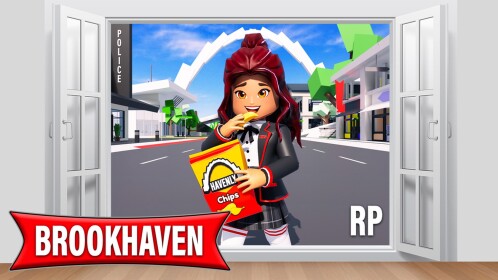
My kids spend time on YouTube. Their friends spend time on Roblox. At some point, every parent I know has the same conversation: "Which one should I be more worried about?"
The honest answer is that they're dangerous in different ways. And understanding those differences changes how you handle each one.
I've spent a lot of time researching both platforms over the past year, partly because I'm a parent and partly because I built a YouTube safety tool for families. So I'm not neutral here. But I'll try to be fair.
Two platforms, two different problems
YouTube and Roblox are both massive, user-generated content ecosystems used by over half the kids in America. But the way kids interact with them is fundamentally different, and that shapes the risks.
YouTube is passive. Your kid watches. The algorithm decides what comes next. The danger is exposure: inappropriate content surfacing through recommendations, Shorts pulling kids into hours of mindless scrolling, and a documented pipeline from harmless creators toward increasingly problematic ones.
Roblox is interactive. Your kid plays, chats, trades, and socializes with strangers. The danger is contact: predators posing as kids, scammers targeting young traders, and gambling mechanics disguised as gameplay.
Both are bad in their own way. But they require different parental strategies.
The numbers side by side
| Category | Roblox | YouTube |
|---|---|---|
| Reach | 144.5M daily users (56% under 16) | 95% of US teens, 85% of younger kids |
| Daily usage | 2.4–2.8 hours/day | 2–3 hours/day |
| Cost to parents | Avg $23.97/mo for paying users | Free (ad-supported) |
| Primary risk type | Interactive (contact with strangers) | Passive (content exposure) |
| Predator risk | Higher — 36+ arrests, direct chat | Lower — comment-based, less direct |
| Parental controls | Better — granular dashboard | Worse — limited native tools |
| Gambling mechanics | Widespread (gacha, loot boxes) | Indirect (promoted in content) |
| Educational value | Roblox Studio (Lua programming) | Curated channels (Mark Rober, etc.) |
YouTube reaches about 95% of US teens and 85% of younger kids. Roblox has 144.5 million daily active users globally, with roughly 56% under 16. Average daily usage is similar: kids spend 2-3 hours on each.
On money, Roblox is more directly extractive. YouTube is free (ad-supported), and most kids never spend a dollar. Roblox paying users average $23.97 per month. The virtual currency is intentionally confusing, with exchange rates that obscure real-dollar costs. A University of Sydney study found children themselves described Roblox spending mechanics as "literally just child gambling."
YouTube makes its money showing your kid ads. Roblox makes its money getting your kid to buy virtual items. Both models have problems. But only one regularly results in kids unknowingly spending hundreds of dollars.
Predator risk: Roblox is worse
This is where Roblox pulls ahead in a comparison nobody wants to win.
At least 36 people have been arrested since 2018 for crimes against children they met through Roblox. The platform submitted 24,500 child exploitation reports in 2024, nearly double the previous year. The pattern is well-documented: predators pose as kids, build trust through gameplay, offer Robux as grooming currency, then migrate the conversation to Discord or Snapchat.
YouTube has predator risks too, primarily through comments on kids' content and through direct messaging on connected platforms. But the interaction model is different. Most kids are viewers on YouTube, not participants. They're not forming "families" with strangers or trading virtual pets with people they've never met.
Roblox's social features are its selling point and its biggest liability. The same chat system that lets kids play with friends also lets adults contact children.
To its credit, Roblox has made real changes: mandatory facial age estimation rolled out globally in January 2026, chat is now disabled by default for kids under 9, and a "Trusted Connections" system limits full chat to verified real-world contacts. These are meaningful improvements. But 146 federal lawsuits, seven state attorney general actions, and an SEC investigation suggest the problem isn't solved.
Content control: YouTube is harder
Here's where YouTube is actually worse.
Roblox has a parental controls dashboard that lets you set content maturity levels, block specific games, limit spending, control who can contact your child, and see what they've been playing. It's more granular than anything YouTube offers.
YouTube's parental tools are frustratingly limited. YouTube Kids exists but can't block Shorts from channels that post both long-form and short-form content. Supervised accounts on regular YouTube give teens more freedom but less safety. There's no way to whitelist specific channels and block everything else without using a third-party tool.
I hit this wall personally. I wanted my kids to watch specific YouTube channels without the algorithm recommending everything else on the platform. YouTube doesn't let you do that natively. That's why I built VidCove. You pick the channels. Your kids see videos from those channels. No algorithm, no Shorts, no wandering.
Roblox at least gives you the tools to restrict what your child accesses. YouTube's approach is more like: here's a filter that mostly works, but your kid might still see things you wouldn't approve.
Take control of YouTube.
VidCove lets you pick the channels. Your kids see only those videos. No algorithm, no Shorts, no wandering.
Try VidCove Free →The "brain rot" comparison
Both platforms have a brain rot problem, and they feed each other.
On YouTube, brain rot looks like Skibidi Toilet, Italian brainrot meme compilations, and sludge content (split-screen videos pairing Subway Surfers footage with Reddit stories). This content has zero educational value and is designed for compulsive consumption.
On Roblox, brain rot takes the form of games. Steal a Brainrot and other popular Roblox games turn meme characters into competitive simulators. Toilet Tower Defense. Brainrot Evolution. These games ride the same cultural wave as the YouTube content, and the cycle reinforces itself: TikTok meme becomes Roblox game becomes YouTube gameplay video becomes more TikTok clips.
The content itself is mostly harmless. Silly, absurd, no worse than Looney Tunes in substance. The real problem on both platforms is time displacement and the monetization mechanics wrapped around it. Steal a Brainrot has significant pay-to-win elements. YouTube brain rot content has no direct cost but eats hours that could be spent on something better.
Educational value: Roblox has the edge (with a caveat)
YouTube has some of the best educational content ever created. Mark Rober, Kurzgesagt, Crash Course, TED-Ed. These channels are genuinely excellent. But kids don't seek them out. The algorithm pushes engagement, not enrichment.
Roblox's educational angle is different. Roblox Studio teaches real programming in Lua. Museum of Science Boston built a Mars rover game with NASA data. Sesame Street has a STEM puzzle game with 70 million visits. Multiple academic studies show measurable learning outcomes from structured Roblox education.
The caveat: educational value on both platforms requires intentionality. A kid passively watching YouTube recommendations isn't learning any more than a kid passively playing Adopt Me. The educational benefits materialize when parents actively curate the experience.
On YouTube, that means choosing channels and removing the algorithm. On Roblox, it means directing kids toward Studio and curated educational experiences, not just whatever game is trending.
So which should you worry about more?
It depends on your kid's age.
Under 9
YouTube is the bigger daily risk (constant content exposure). Roblox is the bigger catastrophic risk (predator contact). Use curated YouTube like VidCove and hold off on Roblox.
Ages 9–12
Both platforms are risky and both are in your kid's life. Prioritize Roblox parental controls (chat + spending limits) and YouTube content curation.
Ages 13+
Roblox gambling mechanics and YouTube content escalation pipelines are the main concerns. Neither platform's native controls are sufficient without ongoing conversation.
The real answer
The question isn't "which platform is more dangerous." It's "am I actively managing both, or am I hoping the defaults keep my kid safe?"
The defaults don't keep your kid safe. Not on YouTube, not on Roblox, not anywhere. The platforms have improved their tools. But using them is on you.
Start with the one your kid uses most. Set up the parental controls you've been meaning to set up. And have the conversation you've been putting off about what they're watching, who they're talking to, and whether anything online has made them uncomfortable.
Make YouTube safe for your kids.
VidCove lets you pick exactly which YouTube channels your kids can access. No algorithm, no Shorts, no brain rot pipeline. You choose the channels. They watch what you've approved.
Try VidCove Free →Part of our series on keeping kids safe online. Also see: How to Block YouTube Shorts for Kids | Best Educational YouTube Channels Kids Actually Watch