Is Dr. Becky Safe for Kids? Safety Score: B
@drbecky · 892K subscribers · Graded November 13, 2026 · Based on 100 recent uploads
I would let my older child or teenager watch this channel, especially if they show an interest in space and science, as it provides accurate and engaging educational content.
Best for ages 12-16 years. Not recommended under age 10. Acceptable for 10-18 years.
The complex scientific topics and terminology are best understood by pre-teens and teenagers.
| Dimension | Score | Headline |
|---|---|---|
| Content Appropriateness | 25/25 | Science content is appropriate; no concerning themes or manipulative tactics. |
| Shorts & Dopamine Factor | 20/25 | Mix of long-form and Shorts, but Shorts are primarily educational snippets. |
| Age Clarity | 15/25 | Content is complex, best suited for older children and teens interested in science. |
| Educational Value | 25/25 | High educational value, explaining complex astrophysics concepts clearly. |
Science content is appropriate; no concerning themes or manipulative tactics.
The channel focuses on astrophysics and space science, with titles like 'Comets DIDN’T bring the ingredients for life to Earth?' and 'What happens to TIME in a black hole?'. There is no evidence of age-inappropriate themes, violence, sexual content, scary imagery, or manipulative clickbait in the recent video titles or descriptions. The content is presented in a factual and educational manner.
Mix of long-form and Shorts, but Shorts are primarily educational snippets.
Out of the 20 most recent videos, 13 are Shorts, making up 65% of recent uploads. However, the Shorts, such as 'ELT's INSANE 39m MIRROR!' and 'NOT a singularity: an infinitely thin donut!', are typically short educational explanations rather than rapid-fire, attention-grabbing clips designed for endless scrolling. The channel also consistently publishes longer-form content.
Content is complex, best suited for older children and teens interested in science.
The topics covered, such as 'Why neutrino astronomy won the Nobel Prize' and 'How do black holes get so SUPERMASSIVE?', involve complex scientific concepts and terminology. While presented clearly, the depth of information and abstract nature of astrophysics would likely be too advanced for younger children. The channel does not explicitly target a specific age group but the content naturally skews older.
High educational value, explaining complex astrophysics concepts clearly.
This channel provides significant educational value, breaking down advanced topics in astrophysics and space exploration. Videos like 'The engineering that makes the Extremely Large Telescope possible' and 'Why it’s so hard to get to Mercury (ft. Scott Manley!)' offer detailed explanations and scientific insights. The content aims to inform and educate viewers about the universe and scientific discoveries.
This channel is run by an astrophysicist who explains complex topics related to space, black holes, telescopes, and planetary science. It aims to educate viewers about recent discoveries and fundamental concepts in astronomy. The content is presented in an accessible, yet scientifically rigorous, manner.
Parents should know that this channel offers high-quality science education, but the topics are advanced and best suited for children who already have an interest in science or are mature enough to grasp abstract concepts. It's not designed for very young children.
I would let my older child or teenager watch this channel, especially if they show an interest in space and science, as it provides accurate and engaging educational content.
Watch a few videos with your child first to gauge their interest and comprehension level, as the topics can be quite advanced.
 Comets DIDN’T bring the ingredients for life to Earth? | Night Sky News November 2026
— Positive
This video exemplifies the channel's commitment to discussing current scientific research and challenging common misconceptions.
 The engineering that makes the Extremely Large Telescope possible
— Positive
This long-form video provides an in-depth look at a significant scientific project, highlighting the engineering and scientific effort involved.
 What happens to TIME in a black hole? (And why physicists can’t agree)
— Positive
This video tackles a complex and fascinating physics question, demonstrating the channel's ability to explain abstract concepts clearly.
 Playing with the new touch screen Macs, for science! #shorts
— Neutral
While a Short, this video is a lighthearted, yet still science-focused, exploration of technology, showing a slightly different facet of the creator's interests.
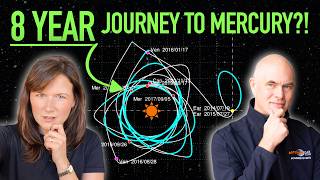 Why it’s so hard to get to Mercury (ft. Scott Manley!)
— Positive
This collaboration with another science communicator enhances the educational value and provides diverse perspectives on a challenging space mission.
VidCove uses AI to assess titles and descriptions from up to 20 recent videos, along with upload patterns such as Shorts across up to 100 recent uploads. It can miss context or make mistakes. Use the report to help you decide what is right for your child.
This report uses titles and descriptions from up to 20 recent videos on Dr. Becky and upload patterns from 100 recent uploads.
The grader scores four dimensions on a 0–25 scale, then combines them into a weighted score out of 100: content appropriateness (40%), Shorts patterns (25%), age clarity (25%), and educational value (10%). That overall score determines the letter grade.
Dr. Becky's Shorts ratio in this sample is 9% — roughly 9 of the 100 videos sampled were Shorts. Reports are regenerated when channel content changes materially or after 180 days have passed.
VidCove lets you approve every channel before your child sees it. No algorithm. No Shorts. No recommendations. Just the channels you trust. Free 7-day trial.