Is Science ABC Safe for Kids? Safety Score: B-
@scienceabc · 538K subscribers · Graded August 2, 2026 · Based on 100 recent videos
@scienceabc · 538K subscribers · Graded August 2, 2026 · Based on 100 recent videos
I would let my older child (10+) watch this channel, especially if they have a strong interest in science, with the understanding that some topics may need further discussion.
Best for ages 12-16 years. Not recommended under age 10. Acceptable for 10-18 years.
The content's complexity and subject matter are best suited for pre-teens and teenagers with developing scientific literacy.
| Dimension | Score | Headline |
|---|---|---|
| Content Appropriateness | 20/25 | Content is generally appropriate, but some topics may be intense for younger children. |
| Shorts & Dopamine Factor | 22/25 | Primarily long-form content, low risk of addictive scrolling behavior. |
| Age Clarity | 18/25 | Targets older children and teens, too complex for preschoolers. |
| Educational Value | 24/25 | Strong educational value, explaining complex science concepts clearly. |
Content is generally appropriate, but some topics may be intense for younger children.
While the channel avoids explicit violence or sexual content, topics like "Can a Nuclear Reactor Explode Like a Bomb?" or "How Iron Dome, THAAD, & Patriot Work: Missile Defense Explained" could be alarming for very young or sensitive viewers. The explanations are factual and not sensationalized, but the subject matter itself carries inherent weight.
Primarily long-form content, low risk of addictive scrolling behavior.
Only 14% of the last 100 uploads are Shorts, indicating a strong focus on longer, more detailed explanations rather than quick, attention-grabbing clips. This pattern supports intentional viewing over passive scrolling.
Targets older children and teens, too complex for preschoolers.
The scientific concepts discussed, such as "Double-Slit Experiment & Wave-Particle Duality" and "Quantum Decoherence," require a level of abstract thinking and prior knowledge that is beyond elementary school children. The language is simplified but the topics are inherently advanced.
Strong educational value, explaining complex science concepts clearly.
The channel consistently breaks down advanced physics and chemistry topics like "Specific Heat Capacity" and "Plate Tectonics" into understandable terms. It aims to teach fundamental scientific principles using relatable analogies and clear explanations.
This channel explains complex scientific concepts in physics, chemistry, and earth science. It uses simplified language and analogies to make advanced topics accessible. The content is designed for viewers interested in understanding how the world works.
Parents should know that while the explanations are clear, the topics themselves are often advanced and may be too abstract or conceptually difficult for children under 10-12 years old. Some videos touch on sensitive subjects like nuclear reactors or missile defense, which might require parental discussion.
I would let my older child (10+) watch this channel, especially if they have a strong interest in science, with the understanding that some topics may need further discussion.
Watch a few videos with your child first to gauge if the complexity of the scientific concepts is appropriate for their current understanding and interest level.
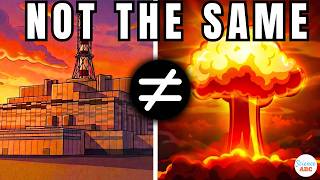 Can a Nuclear Reactor Explode Like a Bomb? Explained in Simple Words
— Concern
Can a Nuclear Reactor Explode Like a Bomb? Explained in Simple Words
— Concern
While the video explains why a reactor cannot explode like a bomb, the topic itself might be unsettling for younger or anxious children.
 Plate Tectonics Explained in Simple Words for Beginners
— Positive
Plate Tectonics Explained in Simple Words for Beginners
— Positive
This video offers a clear and accessible explanation of a fundamental earth science concept, suitable for introducing geology.
 How Airplanes Work: A Simple Explanation for Beginners
— Positive
How Airplanes Work: A Simple Explanation for Beginners
— Positive
This is a good example of the channel's ability to simplify complex engineering principles into an understandable format for beginners.
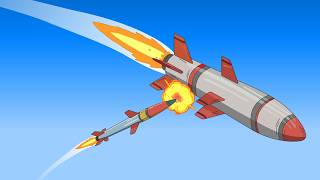 How Iron Dome, THAAD, & Patriot Work: Missile Defense Explained
— Concern
How Iron Dome, THAAD, & Patriot Work: Missile Defense Explained
— Concern
This video discusses military technology, which, while explained factually, may not be appropriate or desirable viewing for all children.
 Schrödinger's Cat Explained in Simple Words for Beginners
— Neutral
Schrödinger's Cat Explained in Simple Words for Beginners
— Neutral
This video introduces a famous thought experiment in quantum physics, demonstrating the channel's focus on advanced scientific ideas.
VidCove's Channel Safety Grader analyzes the 100 most recent videos on Science ABC using Google Gemini, scoring four independent dimensions on a 0–25 scale:
Science ABC's Shorts ratio in this sample is 14% — roughly 14 of the 100 videos sampled were Shorts. Reports are regenerated when channel content changes materially or after 180 days have passed.
VidCove lets you approve every channel before your child sees it. No algorithm. No Shorts. No recommendations. Just the channels you trust. Free 7-day trial — no credit card required.