Is Knowledgia Safe for Kids? Safety Score: C
@knowledgia · 2.2M subscribers · Graded November 8, 2026 · Based on 100 recent uploads
I would let my older child (middle school and up) watch this channel, especially if they have a strong interest in history. Younger children might find the topics too complex or intense without parental guidance.
Best for ages 12-18+. Not recommended under age 10. Acceptable for 10-18+.
The historical topics and detailed explanations are best suited for pre-teens and teenagers with a developed understanding of complex subjects.
| Dimension | Score | Headline |
|---|---|---|
| Content Appropriateness | 15/25 | Historical content includes war and sensitive topics, generally presented factually. |
| Shorts & Dopamine Factor | 24/25 | Channel focuses on long-form historical documentaries, with minimal short-form content. |
| Age Clarity | 18/25 | Content targets older children and teenagers interested in detailed history. |
| Educational Value | 23/25 | Provides detailed historical explanations, fostering understanding of world events. |
Historical content includes war and sensitive topics, generally presented factually.
Videos like "When The Rus fought The Byzantines | The Battle of Dorostolon - 971" and "What Did Hitler do at The End of The War?" discuss historical conflicts and figures. While presented in an educational context, these topics can involve violence, death, and complex geopolitical issues that may be too intense for younger children. The channel avoids sensationalism or graphic depictions.
Channel focuses on long-form historical documentaries, with minimal short-form content.
Only 2 out of the last 100 uploads were Shorts, indicating a strong preference for in-depth, longer-form content. This channel does not appear designed to encourage addictive scrolling behavior, as videos are typically 10-20 minutes long, with some exceeding 40 minutes, such as "THE HISTORY OF MEDIEVAL FRANCE".
Content targets older children and teenagers interested in detailed history.
The topics, such as "How did the Samurai Disappear?" and "Why didn't the USA annex all of Mexico?", require a certain level of historical understanding and attention span. The presentation style is academic, without elements typically aimed at very young audiences, making it clear this is not for preschoolers or early elementary schoolers.
Provides detailed historical explanations, fostering understanding of world events.
The channel offers in-depth historical narratives, explaining complex events and their causes, such as in "How Was Scotland Created?" and "Why did Rome and Persia Fight so Much?". It aims to educate viewers on various historical periods and geographical regions, promoting knowledge and critical thinking about the past.
This channel provides historical documentaries covering various civilizations, conflicts, and geopolitical developments. It aims to explain complex historical events in a detailed and factual manner. The content is suitable for viewers with an interest in history and a capacity for longer, information-dense videos.
Parents should be aware that while the content is educational, it covers historical topics that include wars, colonization, and political figures like Hitler, which may involve discussions of violence, death, and mature themes. These are presented factually, but parental discretion is advised for sensitive children.
I would let my older child (middle school and up) watch this channel, especially if they have a strong interest in history. Younger children might find the topics too complex or intense without parental guidance.
Watch a few videos with your child first to gauge their comfort level with the historical topics and discussions of conflict.
 How did the Samurai Disappear? - HISTORY OF THE SAMURAI in 18 Minutes
— Neutral
This video provides a historical overview of a specific cultural and military group, which can be engaging for those interested in world history.
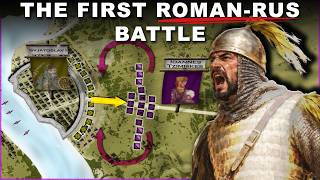 When The Rus fought The Byzantines | The Battle of Dorostolon - 971
— Concern
This video discusses a specific historical battle, which inherently involves themes of conflict and warfare, potentially intense for younger viewers.
 What Did Hitler do at The End of The War?
— Concern
This video addresses a sensitive historical figure and period, requiring a mature understanding of historical context and the atrocities associated with World War II.
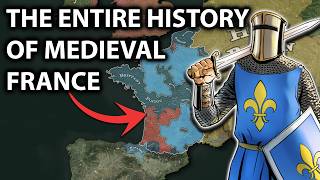 THE HISTORY OF MEDIEVAL FRANCE
— Positive
This long-form video offers a comprehensive educational overview of a significant historical period, providing substantial learning for interested viewers.
 How did Marco Polo Explore the World?
— Positive
This video focuses on exploration and historical figures, offering an engaging and educational look into past journeys and discoveries.
VidCove uses AI to assess titles and descriptions from up to 20 recent videos, along with upload patterns such as Shorts across up to 100 recent uploads. It can miss context or make mistakes. Use the report to help you decide what is right for your child.
This report uses titles and descriptions from up to 20 recent videos on Knowledgia and upload patterns from 100 recent uploads.
The grader scores four dimensions on a 0–25 scale, then combines them into a weighted score out of 100: content appropriateness (40%), Shorts patterns (25%), age clarity (25%), and educational value (10%). That overall score determines the letter grade.
Knowledgia's Shorts ratio in this sample is 2% — roughly 2 of the 100 videos sampled were Shorts. Reports are regenerated when channel content changes materially or after 180 days have passed.
VidCove lets you approve every channel before your child sees it. No algorithm. No Shorts. No recommendations. Just the channels you trust. Free 7-day trial.