Is TED-Ed Safe for Kids? Safety Score: A
@teded · 22.9M subscribers · Graded September 30, 2026 · Based on 100 recent videos
@teded · 22.9M subscribers · Graded September 30, 2026 · Based on 100 recent videos
This channel is highly recommended for children who are ready for more complex educational topics, particularly those in middle school and high school.
Best for ages 10-16+. Not recommended under age 8. Acceptable for 8-18+.
The content's complexity and depth are best suited for children with established reading comprehension and critical thinking skills.
| Dimension | Score | Headline |
|---|---|---|
| Content Appropriateness | 25/25 | Content is consistently appropriate, educational, and free from concerning themes. |
| Shorts & Dopamine Factor | 24/25 | Focuses on long-form educational content with minimal short-form videos. |
| Age Clarity | 20/25 | Targets a broad audience, generally suitable for older children and teens. |
| Educational Value | 25/25 | Provides high-quality, engaging explanations across a wide range of academic subjects. |
Content is consistently appropriate, educational, and free from concerning themes.
The channel maintains a high standard of content appropriateness. Topics like 'How a broken heart affects your body' and 'Why avalanches are most deadly when they stop' are handled factually and without sensationalism, making them suitable for a broad audience without being scary or manipulative.
Focuses on long-form educational content with minimal short-form videos.
With only 1 Short out of the last 100 uploads, representing 1.0% of recent content, this channel prioritizes in-depth, long-form explanations. This approach encourages sustained attention rather than rapid, addictive scrolling behavior.
Targets a broad audience, generally suitable for older children and teens.
The content, while educational, often delves into complex topics such as 'Plato’s infamous Ship of State thought experiment' and 'Why are AI data centers using so much electricity?'. The explanations are clear, but the subject matter and vocabulary are best suited for children with developed comprehension skills, typically middle school age and up.
Provides high-quality, engaging explanations across a wide range of academic subjects.
This channel excels in educational content, breaking down complex subjects like the physics of magnetism in 'Why magnets stumped scientists for so long' and the biology of saffron in 'Red gold: The world's most expensive spice'. Videos consistently offer clear learning objectives and foster understanding of scientific, historical, and philosophical concepts.
TED-Ed offers animated educational videos covering a wide array of subjects from science and history to philosophy and psychology. The content is designed to explain complex ideas in an accessible and engaging manner for learners.
Parents should know that this channel provides high-quality, fact-based educational content that can genuinely enrich a child's understanding of the world. The topics are diverse and presented clearly, making it a valuable resource for curious minds.
This channel is highly recommended for children who are ready for more complex educational topics, particularly those in middle school and high school.
Watch a few videos with your child to gauge their interest and understanding of the topics presented, as some concepts can be quite advanced.
 Why are AI data centers using so much electricity? - Sajan Saini
— Positive
Why are AI data centers using so much electricity? - Sajan Saini
— Positive
This video addresses a current and relevant scientific topic, explaining complex technological concepts in an understandable way.
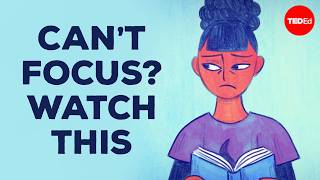 4 ways to fix your attention span - Shannon Odell
— Positive
4 ways to fix your attention span - Shannon Odell
— Positive
This video offers practical, actionable advice on a topic relevant to many students, promoting self-regulation and focus.
 How a broken heart affects your body
— Neutral
How a broken heart affects your body
— Neutral
While the topic of grief and its physical effects is sensitive, the video handles it with scientific explanation rather than emotional distress, making it informative without being overly upsetting.
 Plato’s infamous Ship of State thought experiment - Michael Vazquez
— Positive
Plato’s infamous Ship of State thought experiment - Michael Vazquez
— Positive
This video introduces philosophical concepts and critical thinking through a classic thought experiment, suitable for older children exploring abstract ideas.
 Psychedelics, mind control, radiation-eating: The secret superpowers of fungi - Max G. Levy
— Neutral
Psychedelics, mind control, radiation-eating: The secret superpowers of fungi - Max G. Levy
— Neutral
The title uses intriguing language like 'psychedelics' but the content focuses on the biological and ecological roles of fungi, maintaining an educational and scientific tone.
VidCove's Channel Safety Grader analyzes the 100 most recent videos on TED-Ed using Google Gemini, scoring four independent dimensions on a 0–25 scale:
TED-Ed's Shorts ratio in this sample is 1% — roughly 1 of the 100 videos sampled were Shorts. Reports are regenerated when channel content changes materially or after 180 days have passed.
VidCove lets you approve every channel before your child sees it. No algorithm. No Shorts. No recommendations. Just the channels you trust. Free 7-day trial — no credit card required.